Formodynamics Research Institute
Persistence is successful repetition under coherence constraint.
A scientific framework for understanding how systems persist through repeated phase coherence under constraint across natural, social, and abstract domains.
FRI develops theoretical foundations, formal models, and applied insights that explain how complex systems organize, stabilize, and evolve through oscillatory dynamics, phase alignment, and coherence restoration.
Research Programs
About the institute
What is Formodynamics?
Formodynamics is a theoretical framework for understanding how systems persist through the maintenance of coherence across structure, phase, and exchange. Rather than focusing solely on equilibrium or isolated interactions, formodynamics examines the dynamic conditions that allow systems to sustain identity over time while continuously interacting with their environment.The framework seeks to identify the underlying principles that govern stability, transformation, and breakdown across physical, biological, cognitive, and social systems by studying oscillation, structural balance, and regulated exchange.
Why Formodynamics?
Modern science has developed powerful frameworks for describing how systems behave within specific domains. Physics explains the motion and interaction of matter and energy, biology studies the organization of living systems, and mathematics provides the language through which many of these processes are formalized. These approaches have produced remarkable insights, yet they often focus on localized mechanisms or equilibrium conditions within particular fields.Many real-world systems, however, must continuously maintain coherence while exchanging energy, information, or matter with their environment. From biological organisms and ecological systems to economic networks and social institutions, persistence requires ongoing structural balance rather than static equilibrium.Formodynamics seeks to study these conditions of persistence directly. By examining how oscillation, structural balance, and regulated exchange enable systems to maintain identity over time, the framework aims to identify principles that apply across domains. In doing so, formodynamics attempts to provide a unifying perspective on how stability, transformation, and breakdown emerge in complex systems.
Our Methodology:
A central objective of formodynamics is to identify the minimal structural conditions required for persistence in complex systems.Our Framework investigates the dynamical principles that enable complex systems to sustain stability while continuously interacting with their environment. These principles apply across natural, social, and abstract domains, where systems must balance structure, exchange, and internal coordination in determining persistence.

Our Mission:
Our primary objective at FRI is to study the structural dynamics that allow systems to remain coherent and adaptive over time.Our researchers seek insights that may improve natural, social, and technological systems by identifying asymmetries and structural imbalances across domains and developing principles that support the design of more coherent, resilient, and adaptive systems.
Core Activites:
Fundamental ResearchWe develop theoretical foundations for formodynamics, including structural constraints on persistence, phase organization, and coherence dynamics across systems.Cross-Domain AnalysisWe examine recurring structural patterns that appear across disciplines—from physics and biology to cognition and social organization—in order to identify universal principles governing stability and change.Applied Systems ResearchWe explore how formodynamic principles can improve real-world systems, including organizational structures, social coordination, technological design, and resilience in complex environments.Open Scientific DialogueWe share our research through publications, public writing, and collaboration with researchers and institutions interested in coherence, complexity, and systems science.

Our Strategy:
Develop theoretical foundations and practical insights that help identify structural asymmetries, clarify their consequences, and support the design of systems that are more stable, resilient, and coherent over time.
The Formodynamic Process:
Formodynamics studies how forms arise, persist, adapt, and fail under changing inputs and conditions.Every system takes in inputs, processes them through its internal structure, and produces outputs.When inefficiencies persist, the cause is often not the visible failure itself, but an overlooked mismatch in the conditions, constraints, timing, or inputs shaping the system from the beginning.To easily utilize the formodynamic methodology, FRI has organized the process into the following sequence:
The 11-Step Formodynamic Research Sequence (FRS):
Form → Function → Inputs → Initial Conditions → Internal Dynamics → Outputs → Inefficiencies → Mismatch → Redesign → Re-test → Preserve
Phase I — System IdentificationUnderstanding what the system is and what it is trying to do
1. Define the Form
Identify the bounded system being studied.2. Define the Intended Function
Clarify what successful performance or persistence looks like.3. Identify Inputs
Determine the energy, information, material, incentives, or environmental conditions acting on the system.4. Examine Initial Conditions
Identify the starting configuration, assumptions, constraints, and inherited structures.
Phase II — System DiagnosisUnderstanding how the system actually behaves
5. Map Internal Processing Structure
Determine how the system transforms inputs into outputs.6. Observe Outputs
Document what the system currently produces.7. Identify Persistent Inefficiencies
Determine what failures, wastes, distortions, or instabilities recur.8. Locate the Structural Mismatch
Identify where the disconnect exists between inputs, structure, and function.
Phase III — System RedesignCorrecting the underlying conditions
9. Adjust Governing Conditions
Modify inputs, timing, constraints, feedback loops, or exchange pathways.10. Re-Test the Form
Observe system behavior after intervention.11. Preserve the Method
Document the insight so it can be replicated, taught, and scaled.
Why implement this process?
At FRI, we believe that many persistent inefficiencies exist not because systems are incapable of functioning, but because their initial conditions, inputs, and internal relationships have been misunderstood, overlooked, or poorly aligned.Every form takes in input, processes it through a structure, and produces output. Because conditions are always changing, forms are never truly static. They are dynamic—constantly responding, adapting, stabilizing, or degrading based on the inputs they receive and the structure through which those inputs move.Formodynamics gives us a practical way to study failure and improvement.At FRI, each research director leads a domain of inquiry while contributing to a larger interdisciplinary effort: understanding how systems persist, why they fail, and how better inputs and better structures can produce better outcomes. They then apply their knowledge to develop better systems in ways that are repeatable and sustainable.

Our Research:
FRI investigates the structural and dynamical principles that allow systems to persist, maintain coherence, and organize complexity over time. Our research focuses on identifying the minimal conditions required for stable organization across natural, social, and abstract systems.The Institute approaches this challenge through the development of theoretical foundations, mathematical models, and interdisciplinary analysis of complex systems.
Foundations of Formodynamics:
Research in this area develops the theoretical and mathematical foundations of Formodynamics. This work explores the principles governing persistence, coherence, and structural organization, with the goal of identifying the minimal structural and dynamical conditions required for systems to maintain identity over time.Key topics include oscillatory dynamics, structural constraints on persistence, and the relationship between coherence and system stability.
Complex Systems Research:
The Institute studies how formodynamic principles apply to complex systems across multiple domains, including physical, biological, cognitive, and social systems.This research investigates how structural asymmetries, feedback loops, and interaction patterns influence the stability, adaptability, and long-term behavior of complex systems.
Applied Formodynamics:
Applied research explores the practical implications of formodynamic principles for systems design and institutional organization.Potential areas of application include technological systems, organizational structures, economic networks, and large-scale social systems, where improved coherence and structural alignment may enhance resilience and long-term stability.
More Info:
FRI develops these idea through theoretical research, interdisciplinary collaboration, and the exploration of real-world applications.
We are seeking research directors who are prepared to lead their own projects under this framework—individuals capable of investigating real-world inefficiencies, tracing them back to overlooked conditions and structural mismatches, and developing formodynamic solutions that can be tested, taught, and scaled.

Our Team

Sanket Hitesh Jani
Research Director
Sanket is driven a desire to understand and improve systems that shape human life. His work focuses on identifying structural asymmetries that produce instability or inefficiency and developing principles that support more coherent, resilient, and adaptive systems for the betterment of all.He has a background in interdisciplinary studies from UC Berkeley and experience in systems observation through crisis management and hospitality operations. He founded FRI to identify structural principles that govern persistence and stability across complex systems.Outside of research, Sanket enjoys exploring his creativity through music production and synthesis.

Contact Us
The Formodynamics Research Institute welcomes inquiries from researchers, collaborators, students, and individuals interested in the study of complex systems and interdisciplinary research.If you would like to learn more about the Institute’s work, discuss potential collaborations, or inquire about research initiatives, please feel free to reach out.Email
[email protected]Other Inquiries
[email protected]We aim to respond to all inquiries as promptly as possible.Collaboration & Research InquiriesThe Institute is particularly interested in conversations with researchers and practitioners working in areas such as:Complex systems sciencePhysics and MathematicsSystems theoryEconomics and social systemsInterdisciplinary researchIf your work relates to the study of persistence, coherence, or structural organization in complex systems, we welcome the opportunity to connect.
Future Opportunities
As the Institute grows, additional opportunities for collaboration, research participation, and community engagement will be announced through this website.

POLEX
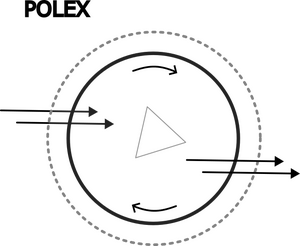
The Persistent Oscillatory Loop with Exchange (POLEX) identifies a minimal structural condition required for persistence.At its core, POLEX describes a system that:undergoes recurrent cycles of activity (oscillation),allows for interaction with its environment (exchange),and maintains coherence across cycles rather than terminating at a single resolution.In many traditional frameworks, analysis often ends at the point of resolution—whether that be equilibrium, collapse, or decision. POLEX shifts the focus from isolated events to what must structurally occur for a system to return, repeat, and continue.A system that resolves without a pathway for restoring coherence cannot persist.
It may function momentarily, but it will degrade, fragment, or terminate over time.By contrast, systems that implement a persistent oscillatory loop with regulated exchange are able to:absorb and respond to inputs,restore internal coherence after disruption,and sustain identity across repeated cycles.POLEX is not a model of a specific system, but a domain-agnostic structural constraint. It applies across physical, biological, cognitive, and social systems wherever persistence is observed.Within the Formodynamics framework, POLEX serves as a foundational condition for understanding how systems:remain stable without being static,adapt without losing identity,and continue operating under changing conditions.
Core Concepts of Formodynamics
Formodynamics examines how systems maintain coherence over time while interacting with their environment. Several foundational concepts guide this research.
Persistence
A central question in formodynamics is how systems sustain identity across time despite continuous interaction with their surroundings. Persistence is understood not as static equilibrium, but as the dynamic maintenance of coherence through ongoing processes of adjustment and exchange.
Structure
Structure refers to the spatial or organizational arrangement of components within a system. The configuration of these elements constrains how the system evolves and determines the pathways through which stability or instability may emerge.
Phase
Phase describes the relative timing and alignment of dynamic processes within a system. When processes remain sufficiently coordinated, systems can maintain coherence; when phase relationships degrade, instability or breakdown may occur.
Exchange
No persistent system exists in complete isolation. Systems maintain themselves through regulated exchanges of energy, matter, or information with their environment. The balance of these exchanges plays a critical role in determining whether systems stabilize, transform, or collapse.
Oscillation
Many persistent systems exhibit recurring cycles or oscillatory dynamics. These oscillations allow systems to continually adjust internal relationships while preserving overall coherence.
Persistent Oscillatory Loops with Exchange (POLEX)
One hypothesis explored within formodynamics is that persistent systems must incorporate recurring loops that permit localized resolution while maintaining global coherence through regulated exchange. These structures may represent a minimal condition for persistence across diverse domains.

Applied Formodynamics
Our research explores how principles of persistence, coherence, and structural organization can be used to improve real-world systems. FRI seeks to identify opportunities for designing systems that are more stable, resilient, and adaptive. We begin by examining how structural asymmetries emerge and influence system behavior.The goal of applied research at the Institute is to translate theoretical insights from formodynamics into practical frameworks that can inform the design, management, and evolution of complex systems across multiple domains.
Tools To Thrive
Tools to Thrive is an applied research initiative within the Formodynamics Research Institute focused on one of the most important and complex systems we can study, the human system.
Across education, finance, decision-making, and personal development, we observe persistent inefficiencies—patterns of stress, poor decision-making, lack of financial stability, and underdeveloped critical thinking.These inefficiencies are often addressed at the surface level. But rarely are they examined through the lens of initial conditions, inputs, and structural dynamics that give rise to them. Tools to Thrive exists to change that.

Tools to Thrive emerged directly from applying the 11-step Formodynamic Research Sequence to the human system. By defining the form (human cognition and behavior), its intended function (effective decision-making and stability), and the real-world inputs and initial conditions shaping individuals, we identified persistent inefficiencies in outcomes such as financial instability and poor decision patterns.Mapping internal structures and observing outputs revealed a consistent mismatch between how people are educated and the demands they face in reality. Rather than addressing symptoms, the sequence directed us to redesign the governing conditions—introducing structured learning inputs, simulations, and feedback systems—and to test and preserve these interventions.Tools to Thrive is not an arbitrary initiative, but a direct, systematic response to diagnosed structural inefficiencies uncovered through the formodynamic research sequence.
Formodynamic Research Sequence - Tools To Thrive
Phase I — System Identification1. Form
The human system — including cognition, behavior, decision-making, and financial activity.2. Function
To enable individuals to think clearly, make effective decisions, maintain stability, and adapt successfully to changing conditions.3. Inputs
Information, education, environment, incentives, emotional experiences, financial exposure, and social influence.4. Initial Conditions
Early education, upbringing, socioeconomic context, belief systems, and exposure to tools or lack thereof.Phase II — System Diagnosis5. Structure
Internal cognitive frameworks, habits, emotional regulation systems, financial understanding, and learned behaviors.6. Outputs
Decisions, actions, financial outcomes, emotional responses, and long-term life trajectories.7. Inefficiencies
Recurring poor decisions, financial instability, emotional volatility, lack of clarity, and inability to adapt effectively.8. Mismatch
Misalignment between:inputs and cognitive structureeducation and real-world demandsincentives and long-term outcomesemotional responses and decision-makingPhase III — System Redesign9. Redesign Conditions
Introduce structured inputs:financial literacycritical thinking frameworksemotional intelligence toolsreal-world simulations (e.g., investing, decision-making)10. Test
Observe changes in:decision qualityfinancial behavioremotional regulationadaptability11. Preserve
Document effective frameworks, teaching methods, and tools so they can be scaled and replicated across communities.
FRS Outcome
Through the Formodynamic Research Sequence (FRS), we analyzed the human system and observed that persistent inefficiencies consistently clustered into three primary domains of breakdown:1) Financial instability emerged from gaps in how individuals process economic inputs and make long-term decisions.2) Poor judgment and inconsistent outcomes pointed to weaknesses in internal cognitive structure—specifically critical thinking and emotional regulation.3) And finally, a growing mismatch between human capability and technological complexity revealed a lack of preparedness to engage with rapidly evolving tools like AI and data systems.
Result
By locating these recurring mismatches between inputs, structure, and real-world demands, the FRS naturally organized intervention into three coherent pathways:1) Financial Freedom (aligning individuals with economic systems),2) Critical Thinking (strengthening internal decision-making structure),3) Future Tech Innovator (equipping individuals to operate within and shape emerging technological environments).These pathways are not arbitrary categories, but formodynamic responses to the three dominant domains where human-system inefficiencies persist.
Areas of Exploration
Organizational Systems
Understanding how structural alignment and feedback mechanisms influence the stability and performance of institutions, organizations, and large-scale operational systems.Economic and Social Systems
Exploring how asymmetries in information, incentives, and structure influence economic networks, markets, and social institutions.Technological Systems
Investigating how coherence principles may inform the design of more resilient technological and computational systems.Human Systems and Well-Being
Applying insights from complex systems research to better understand how environments, institutions, and social structures affect human stability, adaptability, and quality of life.
Long Term Vision
The long-term aim of Applied Formodynamics is to develop practical tools and frameworks that help identify systemic instability, diagnose structural asymmetries, and guide the design of systems that better support human flourishing and long-term resilience.